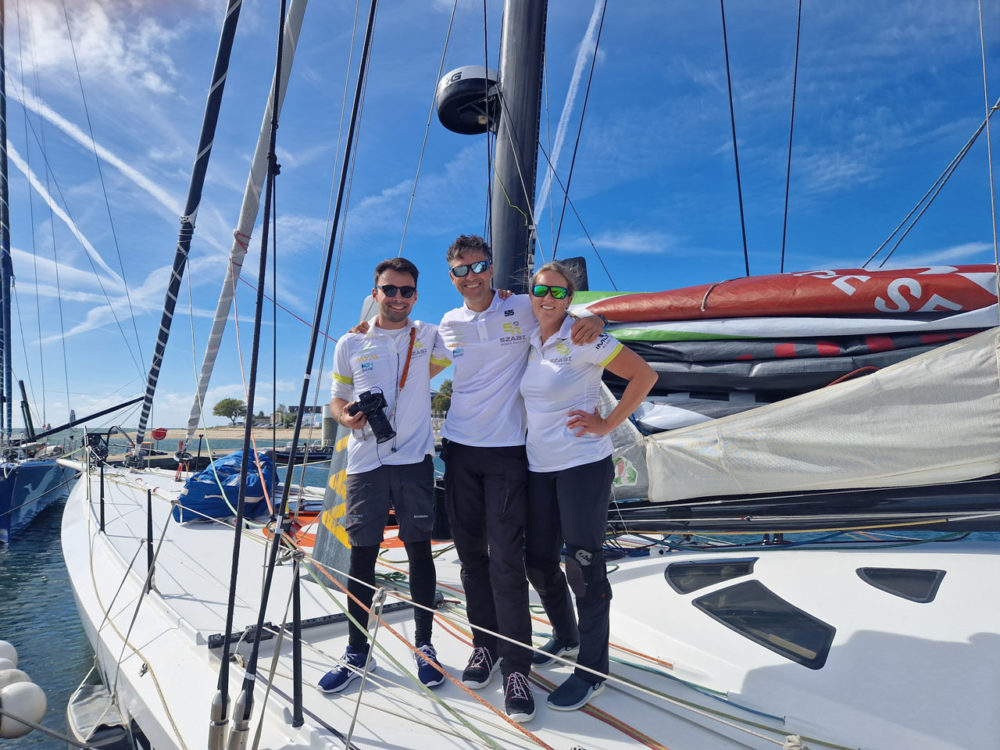
We’ve completed another stage of the journey. This last month has been another intense one for the entire team. The stability testing of the boat, the preparation for the Azimut race, and the race itself required a lot of work. After the Rolex Fastnet Race, there was plenty to fix and improve on the boat. Meanwhile our goal remained the same: we want to sail the boat at its 100% speed potential. To do this, it is essential to get the boat into perfect technical condition, with every system working flawlessly. We would have liked to have made more progress in this area, especially regarding the servicing of the water ballast system, which still isn’t functioning reliably, but we ran out of time. I’ve spent endless hours trying to find the problems, but fixing them requires significant work. Our sail inventory hasn’t grown since the Fastnet, and due to supplier issues, a few key components are missing for the reliable operation of the instrument system. Amidst all this maintenance, fortunately we’ve had time to train, which is undoubtedly positive, as the most significant improvements always come from the hours and miles spent on the water.
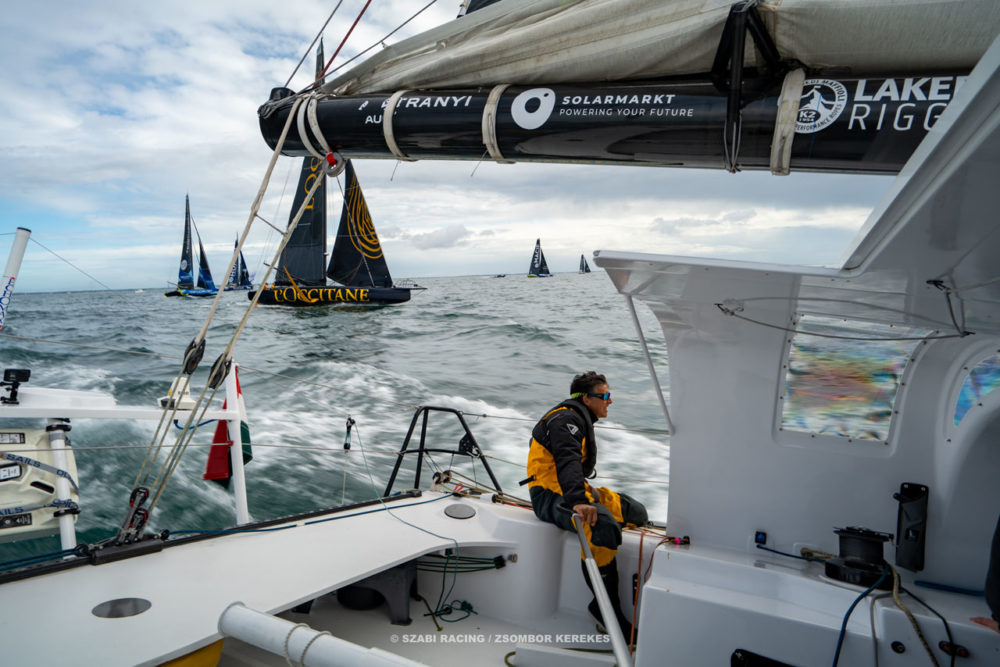
In the period leading up to the race, the weather showed its “too good to be true” side, so I was almost certain that a more significant front with strong winds would arrive for the race. And that’s exactly what happened. A few days before the start, the models predicted a very active front with high winds. Therefore the organizers decided to postpone the Speed Run races to Sunday. For the 48H Azimut race we were still expecting a very active, strong base wind, thunderstorms, and particularly strong gusts. There could have been a difference of up to 10-15 knots between the wind and the gusts. This didn’t make sail selection any easier. Before the start, we could see that the others were also hesitant about which sails to use. Some opted for full mainsail, others for one reef, and there were some who chose two reefs. We went with the 1 reef J2 configuration, which in hindsight turned out to be a good decision. Compared to the Fastnet, I also wanted to get off to a better start. We managed to find a relatively good position and boldly placed ourselves among the faster boats.
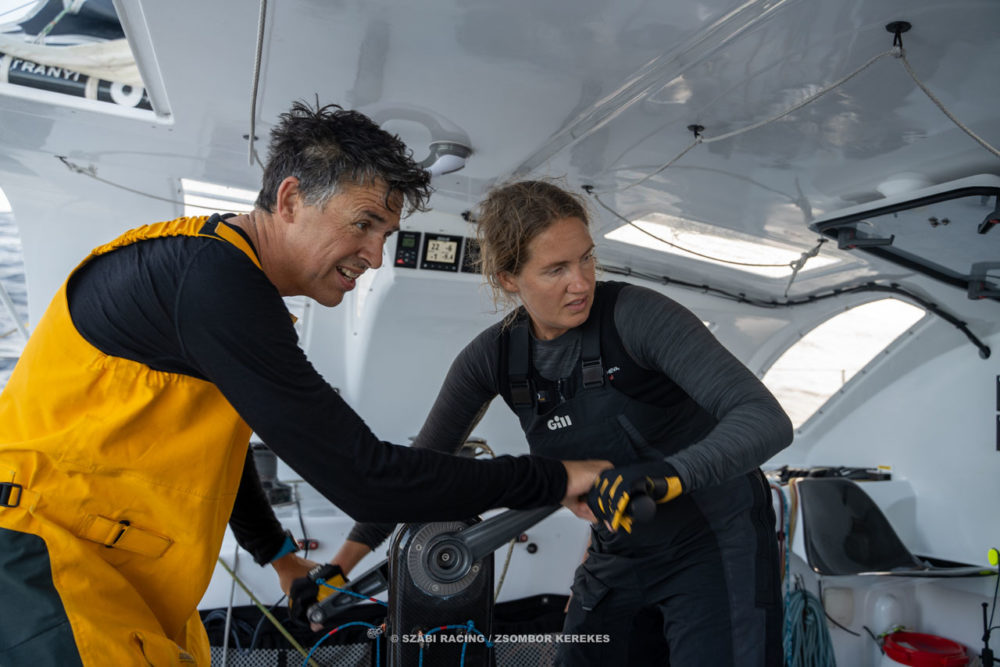
We launched a bit later than I wanted due to a minor issue with the jib, but we still had a great start. I hand-steered the boat during the first stretch, and we held our own against the competition very well. We could change between pointing high and going fast as we pleased. (This wasn’t the case last year at all.) So, in the first upwind section of the race, I was particularly pleased with our speed. Boats like Denis (ex SoH), Ebac (the other Owen Clark design), Gentoo, Fabrice (ex Gamesa, our sister ship) all seemed a bit slower, and we held our own even against Louis and Groupe Setin. As the wind began to strengthen, we put two reefs in the mainsail, but we were still using the J2 jib. We left the steering to the autopilot. This still requires some fine-tuning; finding the perfect calibration and changing over to autopilot takes some time, so we lost a bit during the transition.
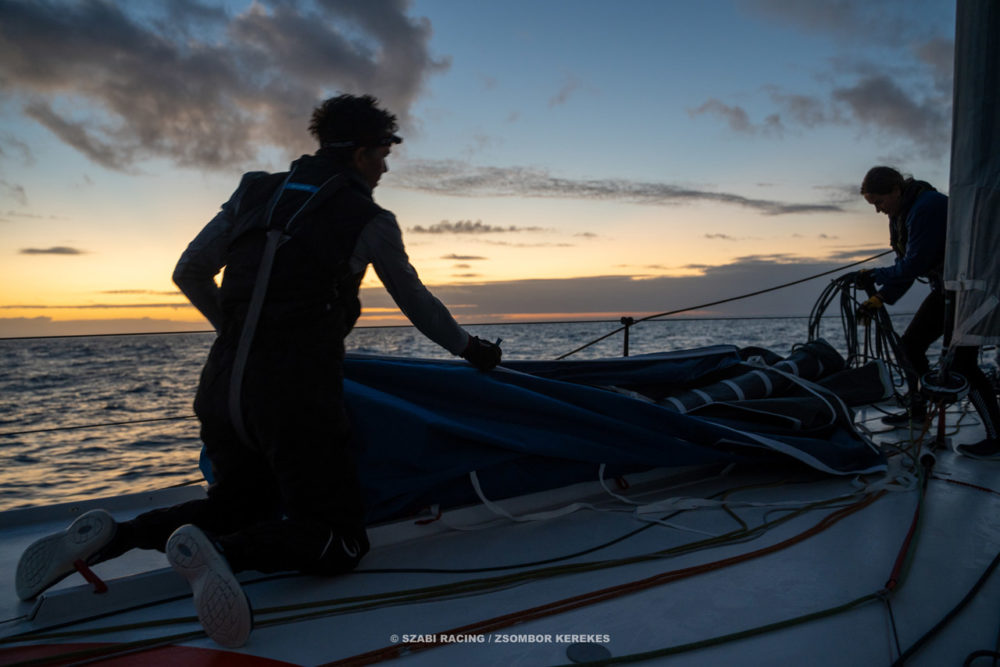
As the evening approached, the wind continued to become stronger, and a storm passed over us, so we decided to swap the J2 for the J3 jib. Before the race, we knew this would be the last voyage for the J3 jib, and we hoped it wouldn’t tear apart in the first gust. The forecast predicted increasing winds overnight, possibly with gusts exceeding 40 knots. We thought it would be worth the change in the long run. It wasn’t the case; we lost a lot of ground with the sail change, and the wind didn’t strengthen as much as forecasted. After the next mark rounding, there was a fast reaching section. With lot of sail trimming, reefing, then shaking out the reef, and changing from J3 to J2, we managed to maintain our speed and make up for the miles lost during the earlier maneuver.
Then came a downwind section where we knew our sail inventory wasn’t complete. The weather forecast still predicted strong winds, possibly with gusts up to 30 knots. We hoped that in strong winds the others wouldn’t fly the big (A2) spinnaker. But we weren’t that lucky. We saw Denis hoist the A2 behind us. He heeled the boat over twice or three times, then stabilized it and passed under us 10 degrees deeper and a couple of knots faster. We acknowledged it and focused on our own tasks. Our biggest problem was the unpredictable behavior of the mast rotation sensor. Incorrect mast angle affects all the data, and the autopilot can’t hold the correct course relative to the wind. We’ve been working for months to replace this part, but unfortunately, they no longer manufacture this type, and the type that other sailors use are not easy to source. It’s vital that this works in single-handed mode.
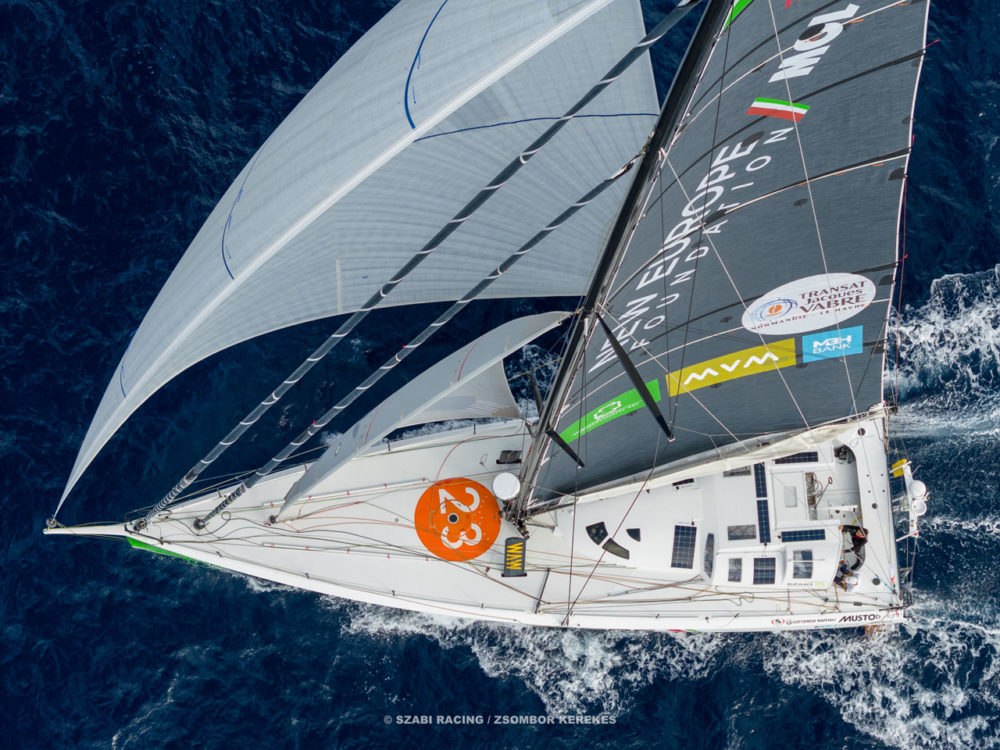
After rounding the next mark we started to sail upwind, where our new J1 jib turned out to be a real game-changer. We started to recover the lost miles, and we were back in the game. But our happiness couldn’t last, because, as the weather models predicted, the wind shifted back to downwind, and there came the A2 spinnakers again. We tried to defend our position by sailing at different angles, making more gybes to maintain the pace, but miracles will have to wait. Fortunately, our brand new A2 spinnaker is on its way to us as I write these sentences! In the end, we finished in 29th place, which could have been 4-5 places better and will eventually be better. The tasks ahead of us for the next race are clear: stabilizing the instrument system, practicing with the A2 spinnaker, and getting a new J3 jib. Sadly, I’m quite pessimistic about the ballast system; I don’t think we can fix that in the available time.
But we carry on with what we have! And we move forward step by step!
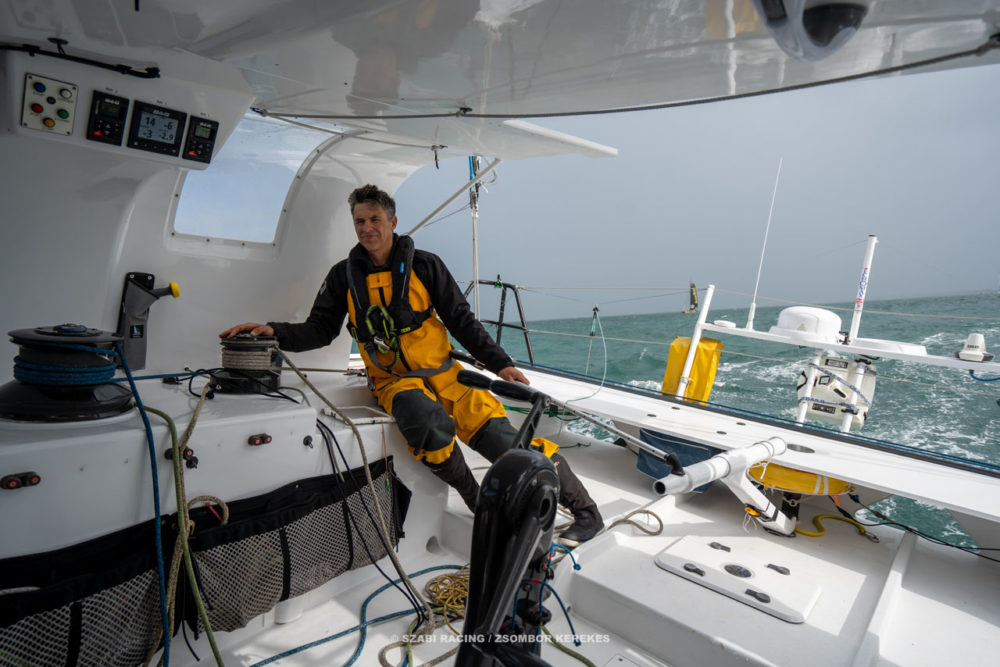
The team members are:
Szabolcs Weöres, Irina Gracheva, Zsombor Kerekes